Search This Blog

Showing posts sorted by relevance for query Tandoku Renshu. Sort by date Show all posts

Tandoku Renshu Application For Judo Not Just Self-Defence

Tandoku Renshu as uchikomi – Solo Practice Turned Technical Training

Many judoka view Tandoku Renshu as a kata mainly for atemi-waza and self-defence, but it serves a much broader purpose. When practised with focus, it builds posture, balance, rhythm, and precision — the same qualities required for strong uchikomi. This makes Tandoku Renshu a valuable solo training method that directly supports effective partner practice.

Image of Newport Judo Logo - This article is about Tandoku Renshu Application For Judo Not Just Self-Defence
Stand Tall: Respect and Affect
Click Here For More Information

Tandoku Renshu, as uchikomi, gives judoka precise movement training without a partner. It builds coordination, balance, posture, and muscle memory [1][2].

Benefits of Tandoku Renshu as uchikomi

Practising solo drills lets judoka focus on technical precision, rhythm, and timing. It enhances balance and self‑correction [1].

Wait... More Martial Arts Judo Information Loading


Active Movement and Balance

Each Tandoku Renshu sequence trains weight transfer and kuzushi. That underpins effective uchikomi entries.

Coordination and Rhythm

Repetition without hesitation builds rhythm. It improves fluid entries when you move to partner practice.

Muscle Memory and Solo Training

Tandoku Renshu engrains correct motion. Judoka develop a reliable form even when no uke is available.

Mapping Solo Sequences to Uchikomi Throws

Tandoku Renshu Sequence Technical Focus Matching Uchikomi Throw
Forward step with hip rotation, arms drawing inward Hip placement and sleeve/collar pull Seoi‑nage
Diagonal step with sweeping arm extension Base leg placement and timing Tai‑otoshi
Rearward step with strong downward arm action Kuzushi backward and body drive O‑soto‑gari
Large circular hip turn with sweeping arm motion Leg‑sweep timing and hip alignment Harai‑goshi
Small inward step with close arm control Tight positioning and forward pull Ko‑uchi‑gari

Training Tips Using Tandoku Renshu as Uchikomi

  • Seoi‑nage: Move slowly and visualise uke’s centre of gravity.
  • Tai‑otoshi: Pretend uke advances and time your block leg.
  • O‑soto‑gari: Drive from your hips, not just your leg.
  • Harai‑goshi: Synchronise sweeping leg with hip pivot.
  • Ko‑uchi‑gari: Feel uke’s weight shift before stepping inward.

Why Judoka Should Apply This Mapping

Tandoku Renshu, as uchikomi, gives judoka the tools to train effectively alone. It teaches footwork, body alignment, timing, and balance needed for uchikomi.

Final Remarks on Practice

Regular solo practice improves technical quality and endurance. It forms a clear bridge between kata and randori. Many high‑level athletes integrate Tandoku Renshu into competition prep [3].

References

  1. Red River Judo defines Tandoku Renshu as solo practice enhancing coordination and muscle memory ( redriverjudo.com).
  2. Kodokan kata Seiryoku‑Zenyo‑Kokumin‑Taiiku explains that Tandoku‑renshu builds balance, coordination, and motion efficiency ( judo-encyclopedia.com).
  3. A-level Judo training course underlines Tandoku‑Renshu and Uchi‑Komi as core supplementary technical training ( archysport.com).


Tandoku Renshu Kata: First Set, Leg & Other Stretches

Tandoku Renshu Stretching

In a previous post I explained how to use handgrips in the Kata Tandoku Renshu. In this post I like to try to explain the stretching involved, particularly the leg stretches but including the punches, kicks and the neck stretches in the Kata in a bit more detail.
Image of Newport Judo Logo - This article is about Tandoku Renshu Kata First Set Leg Stretches
Stand Tall: Respect and Affect
Click Here For More Information

Tandoku Renshu & Leg stretching

I will start with the leg stretching just because I spent the time to do the photos (Fig. 1 & Fig. 2). Your first movements in this Kata are, of course, purely punches. The second set your step with the legs and it is this stepping that you can do the leg stretches.

As can be seen from the photos if you want to turn these moments into a genuine stretching exercise all you have to do is apply pressure to the front leg (Fig. 1) and fully straighten the back (Fig. 2). This is done on both sides and similarly as you do the strikes to the front and the elbow strikes.

It is important to make sure that you are also fully extending your arms as you do the punches

Image of me doing a forward punch from the Tandoku Renshu emphasizing the legs stretching
(Fig 1.)Tandoku Renshu Forward Punch and Leg Stretch


Image of me doing a forward punch from the Tandoku Renshu emphasizing the legs stretching seem from behind
(Fig 2.)Tandoku Renshu Forward Punch and Back Leg Stretch

The full extension of the arms is something that is often overlooked by practitioners, particularly Judo practitioners because we don't normally practise punching. This is of course because we don't do anything like that in competition. But if you are going to do this exercise you should take full advantage of it.

Just as an aside, the full extension not only improves the stretch but it is critical in any strike if you want it to be fully effective as a strike. So even if you are not doing punches for competition by fully extending you will get the full benefit and you will be respecting the tradition of the Kata.

When I say respect the traditions I mean, it should be remembered that Judo is a martial art and many of the punches are retained in a number of Katas. This is important because Judo is still in very competent self-defence, if it is practised that way, so these katas need to be retained. Besides it is Kata that stops Judo from degenerating.

Tandoku Renshu & The Neck

I used to think that you should do a separate neck stretch before you did this Kata if you were using it as stretching before training. But I have come to realise that, if you are doing the Kata properly, there is already plenty of correct neck stretching happening. Therefore separate exercise is obsolete. All you need to do is watch and follow your hand closely with your eyes and head as you do the punches. It also helps with your balance when you are on your toes doing the punch up.

Wait... More Martial Arts Judo Information Loading


Kicks & Stretching

There is however no extension stretching for the legs in the Tendoku Renshu. By that, I mean placing your leg out straight in front of you on any surface and bending forward and touching your toes. Because of this, I recommend that you do such stretches before the Kata so that when you do the kicks you will not overextend your leg.

The kicks in themselves are great stretches and therefore great to do before training or competition but they are ballistic movements and hence should need preparation. So make sure you have done a 15-second leg stretch on each leg at least 3 times before the Kata to avoid any potential leg injury. Any kind of extension legs stretch will do really as long as you do it at least 3 times on each leg and hold it for at least 15 seconds for each leg.

Balance while kicking

Keeping your balance when you are doing the kicks is sometimes a challenge. At least it has been for me. The thing to remember is it is always the position of your head when you are kicking. Whatever leg you are kicking with make sure you tilt your head to the opposite side to maintain your balance. A little cheat if you need it is to pull slightly on the opposite ear lobe of the leg you have off the ground.

Just don't pull too hard or you will not only hurt you ear lobe but pull yourself off balance in the opposite direction. ;)

Practically A Complete Workout

Now that you have learned to do Tandoku Renshu as a stretch. In a previous post you learned to do some strength building with it. All you need is to do the whole thing again, without grips or weights as fast as you can to improve your cardio. Then you will have done practically a complete workout.

A complete workout (practically) could look like this

  1. Do the Tandoku Renshu (done here at normal speed) at about half speed. This is your warmup
  2. Repeat with instructions from this blog post at the same speed but with emphasised movements to do it as a stretch
  3. Repeat with handgrips to improve gripping strength Repeat with weights to improve upper body strength Repeat it as fast as you can to improve your cardio

Finally, don't forget to do the Kata as a Kata occasionally so that you come to appreciate the Kata for itself and to improve the Art in your Martial Art.


In Praise of Kata For Exercise - Tandoku Renshu

Judo Kata Tandoku Renshu Complaints

I've herd untold complaints over the years about the Judo Kata Tandoku Renshu.

Image of Newport Judo Logo - This article is in Praise of Judo Kata For Exercise - Tandoku Renshu
Stand Tall: Respect and Affect
Click Here For More Information

What is Tandoku Renshu?

Tandoku Renshu is the official name given by the Kodokan (Professor Kano's Judo school) in the book Kodokan Judo, to series of Exercise movements, that comprises of the first part of a much longer Kata known as Sei-Ryoku-Zen’yo Kokumin-Taiiku. It was devised by Professor Kano because he said, as I understand it, that he found the Calisthenic type exercises boring and not relevant to Judo. It is often performed in Kata competition as a Kata in itself. Below is a video version of the Tandoku Renshu. The term Tandoku Renshu can, I'm told, also be applied to all forms of individual exercise.

So what's wrong with the Tandoku Renshu?

Well from my pointing of view, nothing.

But those who hate it would say:

  • It's not real martial arts
  • I'm a competition player and Kata has no relevance to me
  • The punches and kick are not how you would really do them they would be ineffective

So let's deal with these one at a time:

Wait... More Martial Arts Judo Information Loading


To those who hate it would say: "It's Not Real Martial Arts"

What does that mean by the way? I'm sure I don't know. This statement is bandied about but I dare anybody to define Martial Arts. Sure Martial Arts is applied to fighting arts but it clearly means much more than that. It is just as readily applied to the way we live our lives and the philosophy with which we live or that is endorsed by a particular style. The Budo if you like.

Saying something from a particular fighting style is not "Real Martial Arts" without first defining what you mean by that, is just meaningless and the definition is, to say the least, elusive. So to dismiss a Kata because it doesn't meet with your approval is not an argument at all but mealy a statement of your personal taste.

To those who hate it say: "I'm a Competition Player and Kata has no Relevance to Me"

At least this statement is honest. However, it's just not true!

No matter how competitive you are every athlete that is worth their salt will practice certain movements over and over again.

Runners will practice their running action as well as work on their rhythm and timing.

Swimmers will rehearse their stroke contiguously tweaking arm, hand, leg and body position as they go. Without timing, they can never make it to their peek.

Judo Players will sooner or later do Uchi Komi in some form or other in order to perfect a throw. And every time a Judoka works on a combination what is that if it's not Kata.

Kata is an integral part of athletic training. You can't do without it as hard as you may try. So just because the Kata I practice is not your Kata how is that a reason to dismiss it.

To those who hate it would say: "The Punches and Kicks are not how you would really do them, they would be ineffective"

This really does miss the point of the kata. The Kata was, as I have said, designed to be an exercise. The emphasis is not on the kicks and the punches but the movement, the stretching and the exertion. The improvement in balance and accuracy alone makes kata worth it.

It has an added bonus that I suspect was at the core of Professor Kano's thinking when he developed it: the movements are martial arts movements, even if they are or are not good punching and kicking style.

One of the things that I had drummed home to me when I was training to be a coach was that the best exercise you can do for your particular sport is that particular sport. The problem is always how do you do warm-ups and stretchers.

The warm-ups are not that hard, usually, a mild form of your sport is easy but the stretches are another thing. Most sports have to do activities that are not related to their sport in order to get the necessary stretching done. But the professor went one better. He came up with a series of exercises that are, stretches and is related.

What are the Actions of Tandoku Renshu

There is stretching: I have to say some very satisfying stretching I've found
Rotation: something seriously neglected by many a Judoka
Slow Movement: there is nothing like building up to something slowly
Fast Movement: done right it gets your heart rate up very satisfactorily

Even if the kicking and punching actions are wrong and I have to say that the more Tandoku Renshu I do I am not convinced that that is true, the principles are there. Frankly, I don't care if they are good style but as a teacher, I'd rather have a student doing an action wrong that had the right general idea than try to get something perfect from the start.

Mind you, you don't want to program in bad habits either but minor corrections are great. I'm no kicking and punching expert but I'm reasonably sure that the Tandoku Renshu gives plenty of good foundation.

You don't have to do it as a Demonstration

There are many people that believe that the Tandoku Renshu has to be performed in a formal fashion only. Can I encourage people to get away from that from time to time? I love to see kata performed but it was intended as an exercise as well.

If you do it in your club or on your own you don't have to be restricted by the number of times you perform particular movements and actions. If you feel the need to repeat one of the actions 10 times why not.

Why not try it as an exercise before you can it. And Sensei's try it as a warm-up on your class.

Start off slow and then do it again faster and then once more as fast as you can. watch the laughter go up with the heart rate and feel the stretch and improvement in balance and accuracy.


Tandoku Renshu Kata First Set With Hand Grips

Solo Judo: Using Kata Build Arm and Grip Strength

Every student of Judo knows that we only have one solo Kata it is called Tandoku Renshu. But this Kata is so flexible I thought I would show you some of the things that I do with it to add value to this already very valuable Judo activity. So in this post, I am discussing using the first set of Judo’s Tandoku Renshu Kata and hand grips to help build arm and grip strength.
Image of Newport Judo Logo - This article is aboutTandoku Renshu Kata First Set With Hand Grips
Stand Tall: Respect and Affect
Click Here For More Information

Whilst I have only included the first few movements of the first set of the Kata in the video, you can obviously continue to put full pressure on the handgrips throughout the whole of the Kata. Thus building arm and grip strength whilst doing Judo by yourself.

My advice would be to do the Kata first as a stretch alone, to make sure you don't risk muscle strain. You should then follow that with a repeat of the Kata using the grips to build strength.

There are a variety of different handgrips available. You can even use a stress ball to start with if the handgrips are too much or even just make and hold a strong tight fist. If that is too much just do it until you can't hold the grip any longer and work up to logger gripping each day or even every second day if you need to. But you can get a whole variety of difficulty in grips strengths, some with soft grips if you need that and if you intend to use this a serious exercise you should get an adjustable handgrip so it can get harder as you improve.

Personally, I have found that giving my muscles a break of a day or two allows me to do increased exercise more rapidly in the long run. Whereas trying to increase endurance each day every day only tends to give me sore muscles.

Wait... More Martial Arts Judo Information Loading


Tandoku Renshu Kata to Build Arm and Grip strength

Hand grips come in a large variety of resistance levels, so you can start off with very light resistance and build up too much bigger resistance. Actually, the tight fist is more than enough to increase arm and grip strength but the big advantage of going from a stress or squeeze ball and then gradually increase the level of resistance is that any sort of handgrip gives you feedback. With the feedback, you can tell if you are actually maintaining your grip consistently throughout the exercise.

If you end up liking this approch you can extend the idea further and repeate the whole process using weights in your hands. You will have to experemints which weights and how to hold the weights when you are doing the kicks but that only adds to the fun I think. Besides holding a weight in the opposite hand to the legs you are kicking with can sometimes help with your balance.

I guess the only question that might come up maybe, "is using a physical piece of equipment consistent with the spirit of Judo"?

To my mind, the answer is an unequivocal "yes". Using a physical piece of equipment IS consistent with the spirit of Judo. You have to keep in mind that this Kata was developed as a warm-up or stretching Kata. Professor Kano did it deliberately because he found other forms of such exercise boring and not associated with Martial Arts. It only seems logical to me that anything that can be done to this exercise by way of improvement would well and truly meet with his approval.


Seiryoku-Zenyo-Kokumin-Taiiku Judo Kata / 精力善用国民体育 Analysis

Introduction to Seiryoku Zenyo Kokumin Taiiku no Kata

The video below of seiryoku zenyo kokumin taiiku no kata is in Japanesse only. There does not appear to be a similar quality version in english. In light of this I thought it only approprete to give a bit of a analysis on seiryoku zenyo kokumin taiiku no kata. Enjoy.

Seiryoku Zenyo Kokumin Taiiku no Kata is a system of physical education exercises created by Jigoro Kano, the founder of Judo, to embody the principle of maximum efficiency in the context of national health and physical training. Developed in the early 20th century, this kata was designed to be more than just a martial arts form; it was a holistic method for developing strong, healthy minds and bodies, deeply integrated with Japan's national physical education reforms of the era.

Image of Newport Judo Logo - This article is about Seiryoku-Zenyo-Kokumin-Taiiku a Judo streaching and fitness Kata
Stand Tall: Respect and Affect
For More Information

OR
Book A Class

The name itself provides a clear insight into its purpose. A linguistic breakdown reveals its core concepts:
Seiryoku Zenyo (精力善用): Translates to "maximum efficient use of energy," a foundational principle of Judo.
Kokumin (国民): Means "national" or "the people."
Taiiku (体育): Means "physical education."
no Kata (の形): Translates to "form of" or "pattern."
Collectively, the name means "Maximum-Efficiency National Physical Education Form."

  • Origin and Creator: The kata was developed by Jigoro Kano around 1924 as part of a broader initiative to modernize and systematize physical education in Japan.
  • Core Philosophy: Built upon the two central pillars of Kodokan Judo philosophy: Seiryoku Zenyo (maximum efficiency) and Jita Kyoei (mutual welfare and benefit).
  • Dual Purpose: The kata serves a dual role as both a martial arts training tool and a comprehensive physical education system.

Wait... More Martial Arts Judo Information Loading


Historical Background and Evolution

The genesis of Seiryoku Zenyo Kokumin Taiiku no Kata is deeply rooted in the modernization of Japan and the educational philosophy of Jigoro Kano. Developed around 1924, its creation was a direct response to a call for systematic and holistic physical education. The dual structure—solo (Tandoku Renshu) and partner (Sotai Renshu) practice—made it highly adaptable for the classroom, dojo, and even military training, acting as a comprehensive system.

Milestone Year/Period Significance
Conceptualization & Development c. 1924 Jigoro Kano develops the kata as a system of physical exercises with direct self-defense applications.
Early Implementation 1920s-1930s The kata is introduced and practiced within Kodokan and influences Japan's physical education reforms.
Adoption in Women's Judo Early 20th Century Kata becomes part of women's judo training; focus on moral and physical education.
Formal Integration into Curriculum c. 1960s The kata is formally integrated into Japan's national school curriculum.
Ongoing Evolution Post-1960s Practice continues to evolve, adapting to modern educational needs while preserving tradition.

The Kodokan Institute played a central and indispensable role in the kata's preservation and spread, from its history to global practice in judo education today.

Technical and Philosophical Principles

Seiryoku Zenyo Kokumin Taiiku no Kata synthesizes physical training and martial philosophy, structured around:

  • Tandoku Renshu: Solo exercises for conditioning and the execution of strikes and blocks (e.g., Goho-ate, Goho-geri).
  • Sotai Renshu: Partnered exercises for applying Judo’s core principles—timing, leverages, and body movement—in harmonious paired practice.
  • Seiryoku Zenyo (Maximum Efficiency): Teaches effective use of physical and mental energy; advocates achieving results with minimal waste.
  • Jita Kyoei (Mutual Welfare): Stresses the ethical foundation of all training for the benefit of both self and others.
  • Mind-Technique-Body Integration: Exercises are designed to develop the mind (shin), technique (gi), and body (tai).
  • Kagami-migaki (Mirror Polishing): Symbolic exercise representing character development through diligent training.
Practice Method Focus Key Characteristics Purpose
Tandoku Renshu Individual Fundamentals Solo movements, striking, kicking, body movement (Tai-sabaki) Conditioning, power, balance, coordination
Sotai Renshu Applied Principles Partner drills, throws, pins, controls Timing, distance, applying Seiryoku Zenyo with a partner

Notable Practitioners and Organizations

  • Kodokan Judo Institute: The primary authority for preservation, standardization, and dissemination of this kata, playing a key role in both Japan and internationally.
  • International Judo Federation (IJF): Promotes judo and kata education globally with support from 200+ national federations.
  • Judo Dojos and National Federations: Integrate this kata into training curricula, recognizing its value for understanding core judo principles and for physical conditioning.
  • Educational Institutions: Universities, schools, and federations in places like Spain (e.g., JUA project) adapt the kata for all ages, notably for seniors’ programs.
  • Notable Practitioners: High-ranking judoka (10th Dan holders) recognized for promoting and preserving traditional kata practice.
Organization Primary Role Key Contributions
Kodokan Judo Institute Preservation & Authority Defines official form; preserves philosophy; reference for authentic instruction
International Judo Federation Global Promotion Standardizes practice; oversees global events; produces educational content
National Federations & Dojos Local Implementation Train local judoka; foster grassroots practice; teach philosophy and technique
Educational Institutions Specialized Adaptation Adapt training for various groups; research health benefits

Cultural and Educational Significance

Seiryoku Zenyo Kokumin Taiiku no Kata is more than a set of exercises; it’s a vehicle for cultural heritage and holistic education.

  • Built for national and moral development, connecting to Japan's vision for a disciplined, healthy, and harmonious citizenry.
  • Emphasizes samurai spirit, efficiency, minimalism, precision, and social harmony (wa 和).
  • Integrates with education to develop both physical fitness and moral character, using symbolic movements (like mirror polishing) to reinforce the value of self-reflection and improvement.

Kata Principle/Feature Cultural Value Educational & Social Impact
Seiryoku Zenyo Efficiency, minimalism, precision Promotes resourcefulness and purposeful action
Jita Kyoei Group harmony (wa 和), cooperation Encourages cooperation, linking individual and collective prosperity
Kata (form, pattern) Respect for tradition, discipline, process Teaches importance of structure, fundamentals, and mastery
Shin-Gi-Tai Holistic self-cultivation Fosters balanced physical, technical, and moral development

Modern Applications and Legacy

  • The kata is globally promoted by the IJF and taught by national federations and dojos as a foundational component of judo education.
  • Adapted for modern health programs, such as fall-prevention and quality of life training for older adults (e.g., JUA project in Spain).
  • Continues to be valued for both its physical and philosophical education, remaining true to Jigoro Kano’s vision for judo as a way of life.


Stretching for Judo You Can Do at Home

Easy ways to build Judo flexibility outside the dojo

During the week, someone asked if I had any special stretches for Judo that work at home. It’s a useful question for judoka who want to improve flexibility outside the club.

Image of Newport Judo Logo - This article is about Stretching for Judo You Can Do at Home
Stand Tall: Respect and Affect
For More Information

OR
Book A Class

Why flexibility matters

Judo relies on explosive movement, timing, and smooth transitions between grips and throws. Consequently, better flexibility helps you move more efficiently and absorb force more safely. Additionally, flexibility reduces the risk of strains during training and randori.

Why flexibility matters

Judo relies on explosive movement, timing, and smooth transitions between grips and throws. Consequently, better flexibility helps you move more efficiently and absorb force more safely. Additionally, flexibility reduces the risk of strains during training and randori.

Wait... More Martial Arts Judo Information Loading


How Tandoku Renshu helps

I usually find the Tandoku Renshu covers most flexibility needs for Judo. This solo kata mirrors the movement patterns you use when executing throws and counters. Practicing it regularly strengthens stabilisers around the hips, core, and shoulders.

Simple alternative stretches

If you do not know Tandoku Renshu, try straightforward sports stretches instead. For example, hip-flexor lunges, seated hamstring stretches, and shoulder dislocations work well. These moves target the hips, hamstrings, back, and shoulders—areas most used in Judo. I have found this structured poster most helpful for home and gym sessions.(affilate link).

Quick tip: Use dynamic leg swings and arm circles before training. Then follow with gentle static holds after practice to improve long-term flexibility.

Recovery and tools

A foam roller and a small massage ball speed recovery and ease muscle tightness. Rolling increases circulation and helps release adhesions in tight muscle fibres. Likewise, using resistance bands can gently expand shoulder range while building control.

For reliable medical and sports guidance on stretching, see resources from trusted clinics. For example, Verywell Fit offers practical flexibility routines and explanations. Also explore the Hospital for Special Surgery’s advice for safe stretching practice.

How often to stretch

Consistency beats intensity when building flexibility for Judo. Aim for short daily sessions rather than a single long session weekly. Even five to ten minutes each day produces clear improvements over several weeks.

Start each stretch slowly, and breathe steadily to allow tissues to relax. Avoid bouncing or forcing positions, particularly when muscles are cold. If pain occurs, stop the movement and reassess technique or intensity.

Combine mobility with strength

Flexibility needs strength to become useful in throws and escapes. Incorporate squats, lunges, and planks to build control through full ranges. Also, add grip-strength and shoulder stability work to support throwing mechanics.

Practical routine to try

  • Warm up: five minutes brisk walk or light skipping, followed by arm circles.
  • Dynamic: leg swings front-to-back and across the body, ten each side.
  • Mobility: hip-flexor lunge with reach, hold thirty seconds each side.
  • Static: seated hamstring stretch, hold thirty to forty-five seconds each side.
  • Recovery: two to five minutes foam rolling on quads and glutes.

Final thoughts

Stretching outside the club supports your judo technique and resilience in training. Whether you practise Tandoku Renshu or follow structured alternative stretches, stay consistent. Over time, you will move more freely and feel stronger on the mat.


Judo Stretching Mistakes - How to Stretch Effectively For Safe Judo

Judo Stretching Mistakes: How to Stretch More Safely and Effectively

Judo stretching mistakes can reduce the benefits of flexibility training and may increase the risk of unnecessary injury. Stretching can support mobility, movement quality, and technical performance, but only when judoka use appropriate methods. Therefore, understanding common stretching mistakes can help Judo practitioners develop a safer and more effective flexibility routine.

Judo places considerable demands on the hips, legs, shoulders, back, and neck. Techniques such as Seoi Nage, Uchi Mata, Harai Goshi, and O Soto Gari require coordinated movement through several joints. Good mobility can therefore make technical movement feel smoother and more controlled.

However, flexibility training should complement Judo rather than become an activity that creates additional problems. The Stretch Coach guide to common stretching mistakes identifies several errors that can reduce the effectiveness of stretching. These principles are particularly useful when adapted to the needs of judoka.

Image of Newport Judo Logo - This article is about Judo Stretching Mistakes
Stand Tall: Respect and Affect
For More Information

OR
Book A Class

1. Stretching an Injury

One of the most important Judo stretching mistakes involves stretching an injured area without considering its current condition.

After a hard throw, awkward landing, or sudden movement, a judoka may experience muscle, tendon, or joint damage. Stretching that area aggressively can potentially make the problem worse.

Instead, injured judoka should allow appropriate recovery and seek professional assessment when necessary. Rehabilitation should then progress according to the injury and professional advice.

Once normal movement begins returning, gentle mobility work may become appropriate. However, the exercises should match the stage of recovery rather than simply following the normal training routine.

This principle matters particularly in Judo because practitioners frequently experience unusual positions during throwing and groundwork.

  • Do not aggressively stretch an acute injury.
  • Allow appropriate recovery before increasing flexibility work.
  • Use professional advice when pain persists, or movement remains restricted.
  • Return gradually to normal Judo training.

2. Stretching Too Hard

Many people believe that a harder stretch produces faster flexibility improvements. However, forcing a stretch can create unnecessary tension.

The Stretch Coach article explains that pushing into pain can activate the body's protective stretch reflex. Instead of relaxing into the movement, the muscles may contract to protect themselves.

For judoka, this is particularly important because Judo already involves powerful and sometimes explosive movements. Stretching should complement that movement rather than create another source of muscular stress.

A useful approach involves moving gradually until you feel comfortable tension. You should not need to grimace, hold your breath, or force yourself deeper into the position.

Good flexibility training should feel controlled rather than competitive. You are training your body to move better, not trying to defeat the stretch.

Wait... More Martial Arts Judo Information Loading


3. Not Holding Static Stretches Long Enough

Another common mistake involves rushing through static stretches without giving the muscles sufficient time to respond.

Static stretching requires you to hold a position rather than repeatedly bouncing through it. The Stretch Coach article recommends longer holds when the goal involves improving flexibility.

However, judoka should remember that not every stretch needs a long static hold immediately before vigorous training. Dynamic movements often provide a better preparation for activity.

Longer static stretching can have a useful place within a separate flexibility session or suitable part of training. The important point involves matching the stretching method with the training objective.

For example, a Judo student might perform gentle mobility work during the warm-up. They could then complete longer controlled stretches after training or during a dedicated flexibility session.

4. Repeating the Same Stretch Every Time

Repeating exactly the same stretches every training session can become another form of Judo stretching mistake.

Judo uses the whole body, so flexibility training should reflect that variety. A routine concentrating exclusively on hamstrings, for example, may overlook important limitations around the hips, shoulders, ankles, or upper back.

Different Judo techniques also create different movement requirements. Therefore, a judoka should consider the movements they regularly perform and identify areas that genuinely require attention.

The Judo Muscle Growth Stretching article highlights several areas important to Judo movement, including the quadriceps, hamstrings, hip flexors, gluteal muscles, calves, shoulders, upper back, and forearms.

Varying exercises can also help prevent excessive emphasis on one particular movement pattern. Consequently, your flexibility program should develop balanced mobility rather than chase one impressive stretch.

5. Trying to Stretch Everything

Another mistake involves assuming that every muscle needs extensive stretching.

Stretching should have a purpose. If one area already moves comfortably, spending considerable time forcing additional flexibility may provide little practical benefit.

Judo requires useful movement rather than flexibility for its own sake. A judoka needs enough mobility to perform techniques efficiently while maintaining strength, balance, and control.

Instead of asking, “How can I become more flexible everywhere?” ask, “Where does limited mobility affect my Judo?”

This approach can make flexibility training more specific and useful.

For example, limited hip mobility could affect certain throwing movements. Restricted shoulder mobility could influence gripping and upper-body movement. Limited ankle mobility could also affect posture and movement during certain techniques.

Identifying these limitations gives your stretching routine a clear purpose.

6. Stretching When Cold

Stretching cold muscles represents another serious mistake for judoka.

The Stretch Coach article recommends warming the body before performing more demanding stretching. A suitable warm-up gradually increases body temperature and prepares the muscles for movement.

Judo already provides excellent opportunities for a sport-specific warm-up. Light movement, tai sabaki, ukemi, uchikomi, and controlled technical repetitions can gradually prepare the body for more vigorous activity.

The Martial Arts Judo website discusses progressing from general activity toward Judo-specific movements during preparation.

This progression makes sense because your warm-up should prepare you for what you are about to do. A throwing session therefore requires different preparation from a gentle groundwork session.

The Tandoku Renshu stretching exercises also provide an interesting Judo-specific approach to combining movement and flexibility.

7. Holding Your Breath

Breathing may seem unrelated to flexibility, but holding your breath can create unnecessary muscular tension.

When judoka concentrate intensely on a difficult stretch, they may unconsciously stop breathing. Unfortunately, that tension can make relaxation more difficult.

Instead, breathe slowly and consistently while performing controlled stretches. Relaxed breathing can help you remain calm and focused throughout the movement.

This also connects stretching with an important Judo principle. Effective movement requires awareness, control, and appropriate use of effort.

The Tandoku Renshu exercise article describes how slow movement, stretching, rotation, balance, and faster movement can work together as part of Judo exercise.

Therefore, stretching should not become a mindless activity. Pay attention to your breathing, posture, balance, and the muscles involved.

8. Looking for a Quick Fix

Perhaps the biggest mistake involves expecting dramatic flexibility improvements after a few stretching sessions.

Flexibility develops through consistent training rather than occasional bursts of enthusiasm. Judo students therefore benefit from building mobility work into their regular training habits.

The Stretch Coach stretching mistakes guide emphasises that meaningful flexibility improvements require regular and consistent training.

This principle is particularly relevant for older judoka. Maintaining mobility becomes increasingly important when stiffness begins affecting movement and recovery.

The Stretching for over-40s Judo practitioners article discusses the importance of maintaining flexibility and mobility as people continue their physical activity later in life.

Consistency does not necessarily mean spending an hour stretching every day. A sensible routine performed regularly can be more valuable than an occasional extreme session.

Making Stretching Work for Judo

Effective Judo flexibility training should support the way you actually move on the mat.

Consider including several different forms of movement rather than relying exclusively on traditional static stretches.

  • Begin with gentle general movement.
  • Gradually increase body temperature.
  • Use dynamic movements when preparing for Judo.
  • Focus static stretching on genuine mobility limitations.
  • Keep stretches controlled and comfortable.
  • Breathe steadily throughout each exercise.
  • Vary exercises according to your needs.
  • Develop flexibility gradually through consistent practice.

The goal should always involve useful mobility. Being able to perform an impressive stretch means little if that flexibility does not improve your Judo movement.

Tandoku Renshu and Judo Flexibility

Judo already contains exercises that can contribute to mobility, balance, coordination, and physical conditioning.

Tandoku Renshu provides an excellent example. When performed with appropriate control, its movements can incorporate stretching, rotation, balance, and coordinated body movement.

The Tandoku Renshu stretching guide explains how certain movements can be emphasised to develop flexibility.

It is important, however, to approach these movements progressively. The kicks and other dynamic actions should not become an excuse for forcing range of motion.

Start slowly, establish control, and gradually increase movement intensity. This approach makes the exercise more useful while reducing unnecessary strain.

Practical Application on the Judo Mat

The best stretching routine is one that you can apply consistently and intelligently.

Before Judo training, focus primarily on warming your body and preparing the movements you will perform. Use controlled dynamic mobility and gradually increase the intensity of your technical work.

After training, or during a separate flexibility session, you can devote more attention to controlled static stretching where appropriate.

Keep monitoring how your body responds. If a particular exercise consistently produces pain rather than comfortable tension, stop and reassess it.

Remember that every judoka has different mobility, training history, age, physical condition, and technical requirements. Consequently, there is no single stretching routine that works perfectly for everyone.

Turn Stretching Mistakes into Better Judo

Judo stretching mistakes often happen because practitioners treat flexibility training as something simple that requires little thought.

However, effective stretching requires preparation, control, consistency, appropriate exercise selection, and an understanding of your own body.

Avoid stretching injuries aggressively. Do not force painful positions. Warm up before demanding flexibility work. Breathe naturally and vary your exercises according to your needs.

Most importantly, be patient. Flexibility develops gradually, just as Judo technique develops through repeated practice.

Use stretching to help you move better, perform techniques more effectively, and remain active on the mat for many years. Make each stretching session purposeful, controlled, and relevant to your Judo.

Good flexibility is not about stretching as far as possible. It is about developing the mobility you need to practise Judo safely, efficiently, and confidently.


Judo Warm-Up Routine - From Stretching to Uchikomi

Judo Warm-Up Routine: Preparing Your Body and Mind for Training

A well-designed Judo Warm Up Routine prepares the body and mind for throwing, gripping, falling, and groundwork. Judo requires explosive movements, balance, coordination, flexibility, and controlled physical contact. Therefore, judoka should never treat the warm-up as an optional part of training.

A proper warm-up gradually prepares muscles, joints, tendons, breathing, and cardiovascular systems for increasingly demanding activity. It can also help create the mental focus needed for productive Judo practice. Stretching has an important place within this process, but stretching alone does not constitute a complete warm-up.

For more detailed information about warm-up principles, see the Stretch Coach warm-up guide.

Image of Newport Judo Logo - This article is about Judo Warm Up Routine
Stand Tall: Respect and Affect
For More Information

OR
Book A Class

Why Warm-Up Matters in Judo

Judo places considerable demands on the entire body. A single training session can involve repeated throws, breakfalls, gripping exchanges, transitions, groundwork, and vigorous randori.

Because movements can become explosive very quickly, the body needs time to transition from rest into activity. A gradual warm-up increases heart rate, breathing rate, blood flow, and muscle temperature.

This preparation is particularly valuable when training involves powerful techniques such as O-soto-gari, Seoi-nage, Uchi-mata, and Harai-goshi.

A warm-up should also prepare the joints and movement patterns that Judo requires. Ankles, knees, hips, shoulders, elbows, wrists, and the spine all contribute to effective movement.

Therefore, a Judo warm-up should be more than simply jogging around the mat.

The Four Components of a Complete Warm-Up

The Stretch Coach approach identifies four important components of a complete warm-up:

  • General warm-up
  • Static stretching
  • Sport-specific preparation
  • Dynamic stretching

These components should progressively increase the body's readiness for physical activity. For Judo, each component can be adapted to movements that judoka regularly perform during training.

1. Begin With a General Warm-Up

The general warm-up should start gently and gradually increase in intensity. Activities such as light jogging, skipping, walking, or easy movement can raise body temperature.

For Judo, this might involve moving around the dojo using different footwork patterns. Light jogging can be combined with side steps, backward movement, and controlled changes of direction.

You might also include:

  • Light jogging around the mat
  • Skipping or gentle hopping
  • Sideways movement
  • Forward and backward movement
  • Arm circles
  • Gentle torso rotations

The objective is not to become exhausted. Instead, the judoka should feel warmer, more mobile, and increasingly prepared for training.

The general warm-up commonly lasts around five to ten minutes, depending upon the individual and the intensity of the planned activity.

Wait... More Martial Arts Judo Information Loading


2. Add Controlled Stretching

Stretching can form an important part of a Judo Warm Up Routine. However, it should be performed appropriately and should not replace general movement preparation.

Stretching after the body has warmed up allows the muscles and surrounding tissues to move through their available range more comfortably. The Stretch Coach warm-up guidance provides further information about incorporating stretching into a broader warm-up.

For judoka, attention should be given to areas that contribute significantly to Judo movement.

These include the:

  • Hamstrings
  • Quadriceps
  • Hip flexors
  • Groin
  • Calves
  • Shoulders
  • Upper back
  • Lower back

Movements should remain controlled and comfortable. Avoid forcing a stretch or bouncing aggressively into a restricted position.

The purpose at this stage is preparation rather than attempting to achieve maximum flexibility.

3. Make the Warm-Up Specific to Judo

This is where a general exercise routine becomes a genuine Judo warm-up.

Sport-specific activity prepares the body for movements that will soon be performed during training. The Stretch Coach warm-up principles recommend progressing from general activity toward increasingly specific drills.

For Judo, this could include ukemi, tai sabaki, uchikomi, gripping movements, and controlled technical repetitions.

For example, a coach might progress from simple footwork into:

  1. Forward and backward movement
  2. Tai sabaki
  3. Breakfall practice
  4. Light uchikomi
  5. Grip movement
  6. Controlled throwing entries
  7. More vigorous technical practice

This progression allows students to rehearse important movements before applying them at higher intensity.

A Judo-specific warm-up can therefore reinforce technical skills while preparing the body.

Tandoku Renshu as a Judo Warm-Up

Judo has a particularly useful exercise that can contribute to warm-up and movement preparation: Tandoku Renshu.

Tandoku Renshu provides an opportunity to practise Judo-related movements without a partner. It can incorporate movement, stretching, rotation, balance, and gradually increasing speed.

An article on Tandoku Renshu as an exercise discusses using movement, stretching, rotation, and changes of speed during practice.

This makes it particularly interesting for coaches seeking a warm-up that remains closely connected to Judo.

Rather than performing every movement at maximum speed immediately, judoka can begin slowly. They can then gradually increase the pace as their bodies become warmer.

This approach also encourages concentration, coordination, balance, and technical awareness.

4. Finish With Dynamic Movement

Dynamic stretching and controlled movement can prepare the body for the faster actions associated with Judo.

Dynamic movements should remain controlled rather than becoming uncontrolled bouncing or swinging. The Stretch Coach warm-up guidance provides additional information on incorporating dynamic stretching into a complete warm-up.

For Judo, suitable movements might include controlled leg swings, arm movements, hip rotations, and progressive movement drills.

The objective is to prepare the body for the ranges of movement required during throwing, gripping, turning, and groundwork.

As intensity increases, the judoka should feel progressively more prepared for randori or harder technical work.

Connect the Warm-Up With Injury Prevention

A consistent warm-up should form part of a broader approach to Judo injury prevention.

A recent article on Judo Injury Prevention and Strength Training highlights the importance of preparation, strength, stability, and movement control.

Judo involves considerable forces through the shoulders, knees, hips, spine, and other areas. Therefore, preparing these areas before demanding activity makes practical sense.

However, a warm-up cannot guarantee that injuries will never occur. Technique, training intensity, physical condition, recovery, coaching, and individual circumstances all influence injury risk.

Consequently, judoka should listen to their bodies and communicate concerns with their coach.

A Practical Judo Warm-Up Routine

A typical Judo Warm-Up Routine can be simple while still providing comprehensive preparation.

For example, a coach could structure a session like this:

General movement – 5 minutes

Begin with light jogging, directional changes, arm movements, and gentle mobility exercises.

Controlled stretching – 3 to 5 minutes

Use gentle, short-duration stretches that address the major muscle groups.

Judo movement – 5 minutes

Progress through tai sabaki, ukemi, technical footwork, and other fundamental movements.

Technical preparation – 5 minutes

Introduce light uchikomi, grip movements, and controlled entries.

Dynamic preparation – 3 to 5 minutes

Increase movement speed gradually using controlled, Judo-specific dynamic exercises.

Progressive training

Move into technical practice, nagekomi, groundwork, or randori as appropriate.

The exact duration should depend upon the student's age, fitness, experience, training environment, and planned session.

Don't Forget Older Judoka

Warm-up requirements can change as judoka age.

Older practitioners may need more gradual preparation before performing vigorous movements. Stiffness, previous injuries, reduced mobility, and longer recovery times can influence how someone should approach training.

Therefore, coaches should provide suitable options rather than expecting every student to perform identical movements.

The article Judo Walking Flexibility Routine provides useful ideas about combining gentle movement with mobility work.

This approach reinforces an important principle: consistency and appropriate intensity are generally more useful than forcing difficult exercises.

Warm Up for the Training Ahead

One of the most important principles is specificity.

A Judo class focused on groundwork does not necessarily require exactly the same preparation as an intense throwing session. Similarly, competition preparation may require greater emphasis on movement, grips, technical entries, and progressive intensity.

Therefore, coaches should consider what students will actually do during the session.

A warm-up for children might incorporate games and playful movement. Experienced competitors might require more structured technical preparation. Older students may benefit from additional mobility and gradual progression.

The warm-up should serve the training session rather than become a repetitive routine performed without purpose.

Put Your Judo Warm-Up Routine Into Practice

A good warm-up should become a normal part of every Judo session.

The goal is not to spend excessive time stretching or performing complicated exercises. Instead, the objective is to progressively prepare the body and mind for the work ahead.

Start gently, increase intensity gradually, incorporate appropriate stretching, and then move into Judo-specific activity. Use movements that prepare students for the techniques and training demands they will encounter.

Tandoku Renshu, ukemi, tai sabaki, uchikomi, gripping exercises, and controlled dynamic movements can all contribute to this preparation.

Most importantly, make the warm-up purposeful. A few well-chosen minutes can help students become physically prepared, mentally focused, and technically ready to train.

A Judo Warm-Up Routine should therefore be regarded as part of good Judo practice rather than time taken away from training. Build it into every session, adapt it to the people on the mat, and progressively prepare the body for the demands of Judo.
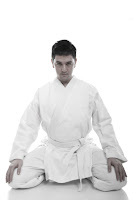


Tadoku Renshu: Things To Remember

Tadoku Renshu: Things To Remember

Some time ago I wrote an article on In Praise of Kata For Exerciser: Tandoku Renshu. I submitted it to a forum for review and I could not believe the barrage of ... well, shall we say the article was not meant to be controversial but somehow ended up so? In fact I stopped submitting stuff to that forum because it was just such an unpleasant experience.

Image of Newport Judo Logo - This article is about Tadoku Renshu: Things To Remember
Stand Tall:Respect and Affect
Click Here For More Information

I mention this because I am very happy to receive comment on anything I write but I have no interest in being flamed no matter how much one disagrees with me or being abused because you think you know more than me.

However, I have wanted to make a few add comments to my article for some time and I have decided that it is time. So with the above in mind here they are for your thoughts.

General things to remember:
  1. Breathe
  2. Keep your back straight except where bending (seems obvious but easily forgotten)
  3. It is an exercise and although it is based on real strikes and kicks and punches the main idea is to stretch and improve cardio, so all the moves may be exaggerated and can be done at different speeds.
  4. Don't let yourself be limited by artificial traditions. The exercise is tradition.


Wait... More Martial Arts Judo Information Loading


Finally let me say that, although Tandoku Renshu forms a part of a larger Kata it is practised as a stand-alone Kata also. Particularly by the Women in the early days of the Kodokan. So don't be afraid of practising it as such.


Atemi Wasa: Valuing Kicks and Punches, Strikes and Blows

Atemi Wasa

I have had parents come to me passing messages that one or two of my students had gone over to Jujitsu. They say that the other parents think that they learn better self-defence from learning kicking and punching. My initial comment is: "I am sorry to lose them as students but I have nothing against well-taught Jujitsu". After all, Judo is Jujitsu with some features that distinguish it and I often have a lot of respect for the teacher that they go to. I have a very good relationship with him.

Image of Newport Judo Logo - This article is about Atemi Wasa: Valuing Kicks and Punches, Strikes and Blows
Stand Tall: Respect and Affect
Click Here For More Information

However, the idea that really concerns me, something that I passionately repudiate, is the idea that children learn better self-defence from learning kicking and punching.

Atmi wasa or Striking practice is well established as a form of self-defence but it has some serious shortcomings particularly when it comes to children. I am referring to children as being under 10 and any child older than that who is not large in stature:

  1. A strike or a kick has to be well placed in order to be effective.


    Wait... More Martial Arts Judo Information Loading


    The physical development of a child works against even the most well-placed strike or kick being anything but a distraction. That is not to say that a well-placed kick or strike won't hurt, but something that hurts is not necessarily disabling. Now I will be the first to admit that a good distraction is an excellent self-defence tool but only if its part of an overall strategy. Running for instance.

    I teach significantly more than this in my classes because running also has to have the correct context to be effective but in the right context running is a good start.

  2. A strike or kick has the potential to do greater harm than good harm in the wrong context.

    The place where a child is going to have the most effect with a kick or a punch is against their own peers. Do we really want our children using kicks and punches in the school ground?

    You have no doubt realized by now that I have a very minimalist approach to Atmi wasa. I sometimes teach a Kata (form practice) that has kicking and punching in it but it is designed as a warm-up exercise not a form of defence (Tandoku Renshu).

    I do however teach about the uses of Atmi to my students and I have a saying " If you are going to hurt someone you'd better make sure it is worth it. Because whether you are right or wrong you are going to get into trouble".

    I have, in another article on, outlined a number of what I think are better ways that can be used to help a child who is being bullied in school. They just require the parents and the school to have the will to do something about it.

    Beyond that, if there is no other way to deal with bullying or threat situation I teach my students a number of highly effective skills that are age-appropriate that try to avoid striking of any kind.

  3. If you strike someone and you don't disable them, they are more often than not, likely to come back at you with even greater violence.

    This is a fact that many of the striking martial arts choose not to discuss. The reality is that violence may not be avoidable but it always begets violence.

    The only time when this is not true is when the threat of the consequences is so great that fear itself is the deterrent. Even then some people are so controlled by fear that they respond to a treat irrationally and to their own detriment and the only way to stop them is to disable them to the point where they have no ability to act any more.

    In our context consider the child that has kicked their way out of a situation against a much stronger attacker. What do you think the reaction of the attacker is going to be? Let me tell you that it is not often going to be to run away.

    Anger, pain and the loss of face are great motivators and the psychology of a bully is much more complex than people think. Only some bullies will run away if they are stood up to.

  4. The effect of a kick or a strike on an adult is minimal

    Consider the prospect of a child coming up against an adult. It's is obvious that the effect of a kick and a punch is going to be minimal.

    Sometimes I teach demonstration self-defence classes and as part of the demonstration I invite a child up to hit me as hard are they can. Even the children that have been smart enough to hit me in my testicles have had little effect. Because they are just not strong enough or fast enough. How much effect will they have on an adult who wants to hurt them?

    I will admit that a child that has been taught to hit properly will have more effect but not that much.

    and finally:

  5. Faulty kicking style

    The fact is Kata is what is taught in many of the kicking and punching styles of martial arts and it is very useful as a teaching tool. Useful to help instil form and automatic movement. But it is also very good at programing faults into someone's technique if not watched very carefully. Faults that can be extremely difficult to teach out.

    Now all students of any kind will pick up faults but consider the prospect of a faulty placed kick. Forget about the fact that schools are not always just places to be. That is nothing compared to the trouble a child will get into if someone ends up with a broken arm or leg or even skull. The legal aspect of kicking and punching are enormous.

Conclusion

In my view, there is only one value in teaching children to kick and punch and that is so they will be better in this form of Martial Art when they get older. This cannot be underestimated.

Properly taught Atemi Wasa Kata is of great benefit to an older student that has been taught young. But we must get out of this attitude that teaching a child to kick and punch will help them to defend themselves.

In most cases, it just won't!


Stretching Does Not Prevent Injury, In The Short Term

The benefits of stretching are well known... or are they?

I was always taught that stretching before any sporting activity is essential in order to avoid injury. But some research is now suggesting that it does not actually help at all.

Image of Newport Judo Logo - This article is about Stretching Does Not Prevent Injury, In The Short Term
Stand Tall: Respect and Affect
Click Here For More Information

My personal favourite is to use Tandoku Renshu as warmup stretching, closely followed by Ju No Kata (see video below). I find stretching at my age to be essential if I am to do any Judo at all. Forget about an injury, if I am going to just simply be able to move with any kind of freedom on the mat, I need to get those muscles moving or I'm not.

However, in his article 12 Benefits of Stretching – Backed by Science Brad Walker shows that, although in my case it might get you moving there is little evidence to show that stretching immediately before your preferred activity actually prevents injury.

Image of Stretching Course
Become Loose, Limber & Pain-Free

This may come as a surprise to you as I know it did to me. However, as you can see by the title of his article he is not advocating that we should stop stretching altogether. What he goes on to show is that even if there is no immediate benefit, there is a significant benefit over the long term.

The article is well worth a read and may change your approach to stretching over the long term, particularly if you are a competitor.


Judo Muscle Growth Stretching - Building Strength, Flexibility, and Power

Judo Muscle Growth Stretching: Boosting Strength, Mobility, and Performance

Judo demands strength, power, flexibility, and endurance. Therefore, Judo Muscle Growth Stretching can become a valuable addition to a well-planned training program. As one of the world's most respected martial arts, Judo requires athletes to develop both physical strength and technical precision.

While resistance training remains the primary driver of muscle growth, stretching may complement strength development by improving mobility, encouraging full ranges of motion, and supporting recovery after demanding sessions. Furthermore, some evidence suggests that training muscles in a lengthened position may support hypertrophy when combined with effective strength training.

Image of Newport Judo Logo - This article is about Judo Muscle Growth Stretching
Stand Tall: Respect and Affect
For More Information

OR
Book A Class

Why Muscle Growth Matters in Judo

Success in Judo depends on more than technical skill alone. Strong muscles help judoka generate powerful throws, maintain balance, resist opponents, and protect joints during dynamic movement.

Like many martial arts, Judo places unique demands on the entire body. However, unlike striking arts, Judo relies heavily on throwing, gripping, lifting, and controlling an opponent using efficient body mechanics.

Moreover, greater muscular endurance allows athletes to maintain good technique throughout long training sessions and challenging contests.

Benefits of increased muscle strength include:

  • More explosive throwing power.
  • Improved gripping endurance.
  • Better posture during randori.
  • Increased resistance to fatigue.
  • Enhanced joint stability.

However, muscle growth should never come at the expense of flexibility. A judoka must remain mobile enough to execute techniques smoothly while avoiding unnecessary injuries.

Understanding Stretching and Muscle Growth

Some strength coaches suggest that stretching immediately after resistance training may assist muscle growth. One theory proposes that muscles become heavily pumped during exercise, placing pressure on surrounding fascia.

Stretching during this period may encourage the fascia to become more adaptable over time. However, this theory remains debated among researchers and strength professionals.

Modern research suggests that exercises performed through longer muscle lengths may contribute to hypertrophy under certain conditions.

Therefore, stretching should be viewed as a complementary training method rather than a replacement for progressive resistance training.

For further reading, see the article Stretching for Muscle Growth.

Wait... More Martial Arts Judo Information Loading


Applying Judo Muscle Growth Stretching After Training

The best time to perform Judo Muscle Growth Stretching is after a demanding strength workout or intensive Judo session.

At this point, the muscles remain warm and filled with blood. Consequently, stretching becomes more comfortable while allowing muscles to gradually relax.

Each stretch should remain controlled and comfortable. Never bounce or force the movement beyond your natural range.

Most coaches recommend holding stretches for approximately 20 to 30 seconds while maintaining steady breathing.

Focus particularly on muscles heavily used during Judo, including:

  • Quadriceps.
  • Hamstrings.
  • Gluteal muscles.
  • Hip flexors.
  • Calves.
  • Chest.
  • Shoulders.
  • Latissimus dorsi.
  • Forearms.
  • Neck muscles.

Stretching these muscle groups supports the movements required for throwing, gripping, groundwork, and breakfall practice.

Judo practitioners can also develop mobility through structured exercises such as Tandoku Renshu stretching exercises, which combine traditional Judo movements with flexibility training.

Stretching Supports Better Judo Technique

Flexible muscles often allow smoother movement during throwing techniques.

For example, techniques such as Seoi Nage, Uchi Mata, Harai Goshi, and O Soto Gari require coordinated movement through the hips, shoulders, and spine.

Many martial arts encourage flexibility because it supports faster movement, improved balance, and better body control.

In Judo, flexibility allows judoka to move smoothly between standing techniques, transitions, and groundwork while maintaining stability.

Maintaining flexibility becomes increasingly important as judoka mature. The article Stretching - All the Basics for over 40's highlights how regular stretching can help improve mobility and reduce stiffness, especially for older martial artists.

Likewise, groundwork techniques demand mobility while maintaining strength and control.

Because of this balance, stretching may improve technical efficiency while reducing unnecessary muscular tension.

The Judo Information Site provides extensive technical information demonstrating how mobility contributes to effective technique execution.

Recovery Remains Just as Important

Hard training creates microscopic damage within muscle fibres. Recovery allows these fibres to rebuild stronger than before.

Stretching alone cannot create significant muscle growth. Nevertheless, it may support recovery by reducing muscle tightness and restoring comfortable movement after training.

This balanced approach benefits Judo practitioners as well as athletes participating in other martial arts that require explosive movement and repeated physical effort.

A complete recovery strategy should include:

  • Progressive strength training.
  • Technical Judo practice.
  • Quality sleep.
  • Balanced nutrition.
  • Adequate hydration.
  • Sensible stretching routines.

Recovery practices should also be combined with appropriate training progression.

The FITT Training Principle for Judo explains how frequency, intensity, time, and type of exercise can be adjusted to improve fitness while reducing the risk of overtraining.

When these elements work together, athletes create the ideal environment for long-term improvement.

What Does Current Research Suggest?

Modern research continues to examine how stretching influences muscle development.

Some studies suggest that resistance exercises performed through a greater range of motion may increase hypertrophy. Meanwhile, the older theory that stretching permanently expands fascia has less scientific support.

Accordingly, most sports scientists recommend combining progressive overload with mobility training rather than relying on stretching alone.

Strength development and injury prevention also work together in Judo.

The article ACL Injury Prevention in Judo Through Neuromuscular Training discusses how strength, coordination, and movement control contribute to safer and more effective athletic performance.

The PubMed database provides access to current research examining stretching, hypertrophy, and resistance training.

Practical Stretching Tips for Judoka

Developing a consistent stretching routine requires discipline rather than complexity.

Keep these practical suggestions in mind:

  • Warm up thoroughly before stretching.
  • Stretch after strength or Judo training.
  • Hold each stretch for 20 to 30 seconds.
  • Avoid painful or aggressive stretching.
  • Breathe slowly throughout each movement.
  • Stretch both sides equally.
  • Remain consistent throughout the training season.

Small improvements performed regularly often produce greater long-term benefits than occasional intense sessions.

Building Better Judo Performance Through Balanced Training

Muscle growth, flexibility, and technical skill should develop together rather than separately.

Like many traditional martial arts, Judo rewards athletes who train consistently and intelligently.

Resistance training provides the primary stimulus for building stronger muscles. Meanwhile, sensible stretching may help maintain mobility, support recovery, and improve movement quality throughout training.

A complete Judo training approach combines strength, flexibility, endurance, and technical development.

The article Endurance in Judo - Train Smarter for Better Performance demonstrates that successful judoka must develop multiple physical qualities rather than focusing on only one area.

Every judoka should view Judo Muscle Growth Stretching as one component of a balanced development plan instead of a shortcut to bigger muscles.

Combine intelligent strength training, quality coaching, sound nutrition, and regular stretching to create a stronger, more resilient body that performs confidently both in the dojo and during competition.

By applying these principles consistently, Judo practitioners can improve physical capability while respecting the traditional values of discipline, control, and continuous improvement that define this respected martial art.


Popular Posts